Accelerating the
next generation of medicine

The fastest, most cost-effective path from therapy idea to first-in-human study. Built for neuromodulation researchers and startups who can't afford to wait years to prove their science.

10
Humans Implanted
3
FDA IDEs
16
Active Pilots
30+
Years of Experience
New hope for difficult conditions

3 billion people live with
neurological conditions

Chronic pain. Incontinence. Paralysis. Depression.
Drugs often fall short or create new issues for these patients. Neuromodulation is a new option, using electrical signals via implanted devices, to precisely apply treatment to nervous tissue

Targeted & Reversible

Unlike drugs, electrical stimulation acts precisely on specific neural circuits — restoring movement, relieving pain, and regulating autonomic function without systemic side effects.

50+ Treatable Conditions

From paralysis and chronic pain to bladder dysfunction and autonomic disorders, neuromodulation addresses conditions where systemic drugs can't reach.

15,000 Active Researchers

A global community of biomedical engineers and clinical investigators working to translate neuromodulation science into therapies that reach patients.

Every neuromodulation idea needs hardware to prove it.

This is where most promising therapies die. Not from failed science, but from the cost and complexity of getting implantable hardware.

The hardware problem

Building custom hardware takes
4–8 years and up to $5.5M

Existing options are expensive, IP-locked, and force every researcher to solve the same problems from scratch. More promising therapies die here than from failed science.

Prohibitively Expensive

A human-grade implant built in-house runs $900K–$5.5M before a single participant is enrolled. CDMOs charge $2M–$7.5M for the same outcome. Most labs never get there.

IP-Locked

Existing platforms require expensive licensing. IP constraints limit customization and create long-term dependency on commercial vendors at every stage — from benchtop to first-in-human.

Regulatory Dead Ends

Without an established FDA pathway, every new platform starts from zero. Each step — IDE application, device modifications, multi-site expansion — requires years of documentation and fresh approvals.

The Solution

The world's first open-source,
fully implantable
neuromodulation platform

The COSMIIC System is the fastest, most cost-effective path from therapy idea to first-in-human study. It's the same platform already proven in FDA-approved human studies — available to any lab or startup from day one.

  • Open source — no licensing required

    PCB designs, firmware, and regulatory documentation freely available to build on

  • Established FDA regulatory foundation

    3 IDE approvals provide a reference path for new studies

  • Modular and customizable

    Power, stimulation, and recording modules adapt to your therapy. Same hardware from benchtop to first-in-human

  • Saves 3–7+ years and up to $10M

    Compared to building in-house or hiring a contract device manufacturer
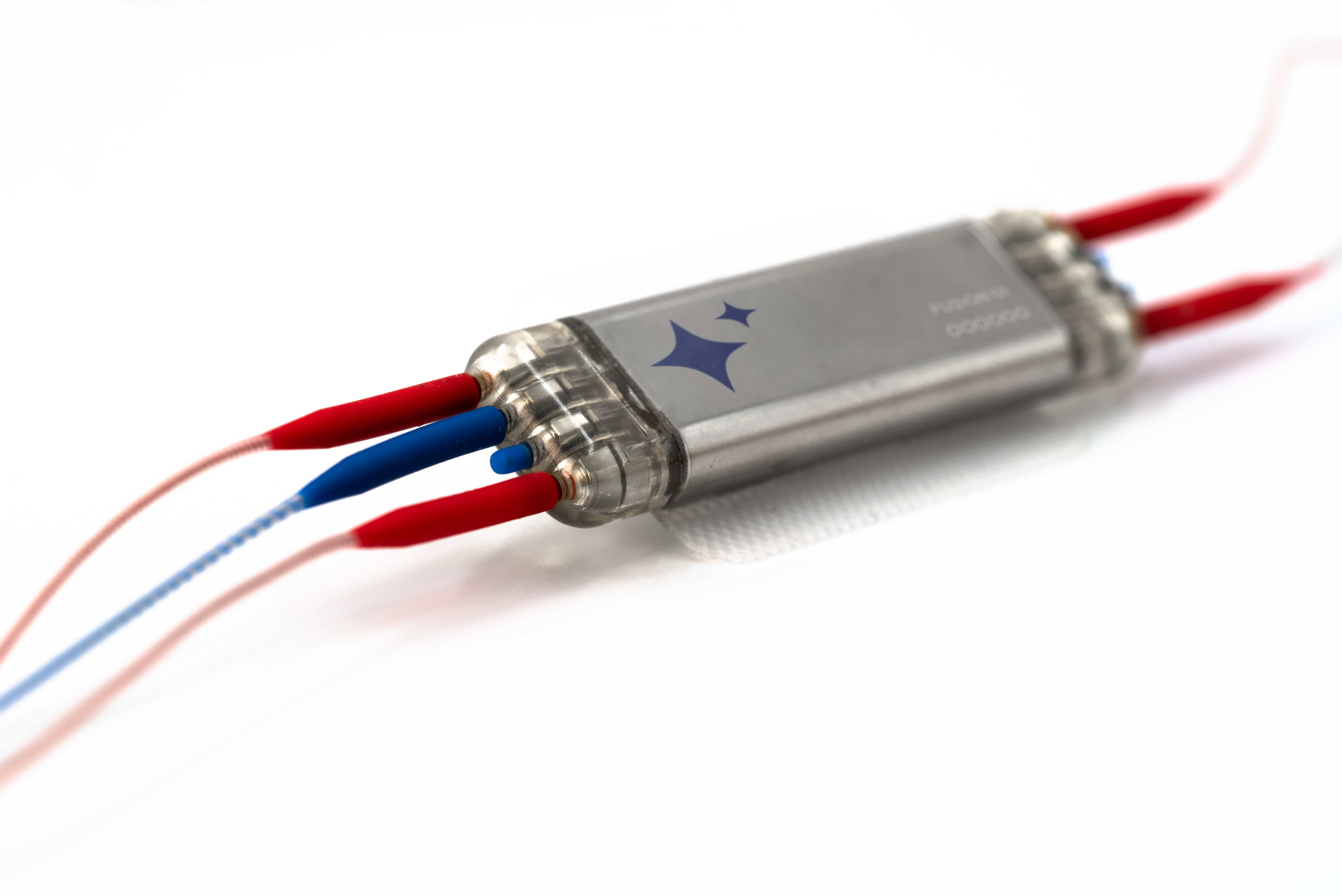
COSMIIC Stimulation Module
The platform

One platform
across stages of development.

Start with a benchtop kit. Advance to an animal-grade implant. Graduate to a human-grade system for first-in-human trials — the same platform the entire way.

Development Kits

Benchtop system with SDK for developing and testing stimulation algorithms. The fastest entry point to the COSMIIC platform.

Starting at $5K →

Animal Grade Systems

Low-cost fully implantable version for preclinical animal studies. Validate your therapy before advancing to human trials.

Starting at $15–20K →

Human Grade Systems

Fully implantable system for FDA IDE first-in-human studies. The same platform already proven in 10 human participants.

Starting at $100K →

Services

Technical integration and regulatory support from the engineers who built the platform — from IDE submission strategy to device customization.

Contact us →
Real traction

This isn't hypothetical.
It's already working.

Deployed across research groups in the US and Europe, with an established FDA regulatory foundation and a growing pipeline of labs and startups.

10
Humans Implanted
3
FDA IDE Approvals
16
Active Pilots

Active Research Areas

Bladder Control

Pudendal nerve stimulation for incontinence · Q2–Q3 2026 large-animal studies in sheep & pigs

Pain & Spasticity

Modulation research across multiple US and European sites

Movement Restoration

Functional electrical stimulation for post-paralysis rehabilitation

Autonomic Control

Closed-loop vagus nerve stimulation using custom nerve cuffs

Get started

Ready to accelerate
your program?

Trusted by research teams & organizations